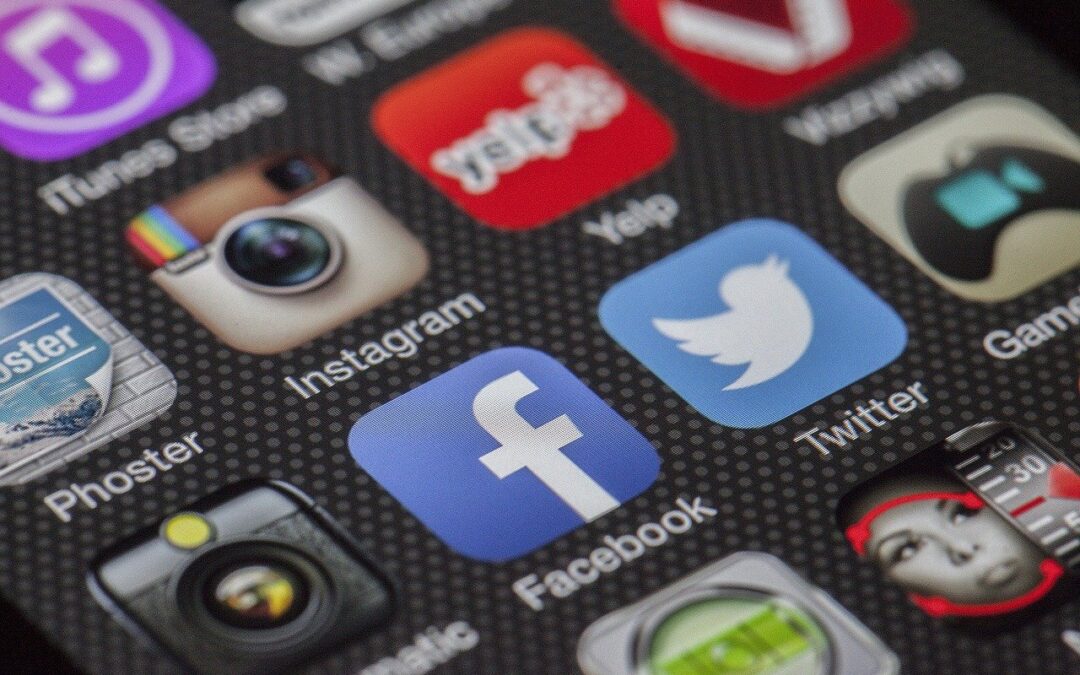
When the first social media sites appeared, myself and many people I knew were thrilled to learn of a new way to contact people you’d fallen out of touch with; to reconnect. And if the recipient of an approach preferred to remain out of reach in the shadows, all they had to do was to stay off any social platforms, or simply decline an invitation to connect.
It was the days of ‘Friends Re-united’. It was decades since I’d been in touch with my old school chums, and even if we didn’t contact each other, their brief profiles told me a little about their lives; ‘Married, two kids, moved to Wales, own a dog called Buster and work for a double glazing firm.’ It was rarely anything to set the world alight, but it was informative, not boastful. And it was honest.
Now, in 2022, social media seems to inhabit a very different space.
Too frequently, we hear of young people who have harmed themselves, or worse, because of on-line bullying, or because they have felt coerced into doing a ‘challenge’, fearful that their refusal to take part will single them out. There appears to be an on-going debate between where parental responsibility ends and the conscience of the social media companies begins.
Neither do the platforms negatively affect only our youth. As adults we are bombarded with images suggesting the poster is leading a better, more successful life. That they are slimmer, better looking, fitter, wealthier, leading their ‘#bestlife.’ For many, the transparency of such posts is obvious; especially for cynical sorts, like myself, who prefer to watch comedians like Celeste Barber, who use humour to remind us all that it’s all–well mostly all—a sham. Yet for anyone who faces challenges, whose confidence has been dented, whose life is not going how they would like, a steady stream of apparently perfect people popping up on their feeds can be very detrimental to their mental health.
Even if, like me, you’re not affected by seeing what everyone else is doing and what they have, social media is addictive. We can try to deny it (I do!) but I know I have spent way too much time scrolling moronically through Facebook, Twitter and Instagram. TikTok? Don’t even go there. I’m far too old to even try to understand what that’s all about!

The darker aspects of social media were one of the many contributing factors that led to UK based hospitality group, J D Wetherspoon , closing all their accounts with little warning, around four years ago. The company’s chairman, Tim Martin, was quoted as saying that if people “limited their social media to half an hour a day, they’d be mentally and physically better off (…) I find most people I know waste their time on it. A lot of them say they know they waste their time on it, but they struggle to get off it.”
I followed this story. Many people claimed that it was a publicity stunt; that in ditching their social accounts, Wetherspoon’s would get people talking about them, and quietly start again six months later.
But they never have. I contacted their PR spokesmen when I was putting together this post. The charismatic ex-journalist, Eddie Gershon is often quoted as the official spokesperson for the company and when I asked if Wetherspoon’s had ever regretted leaving social media completely, his reply was typically brief and to the point. ‘Absolutely not.’
Ironically, around twenty four hours after we had exchanged emails, I saw a news article stating that Wetherspoon’s were in financial difficulties and as such were having to sell a considerable number of their pub premises. Did the lack of social media influence this? Who knows, but personally, I doubt it. Lockdowns, staff shortages and now rocketing energy prices have had a huge impact on the hospitality industry. Taking this into account, the company’s financial situation can most likely be explained by those factors. Not because they haven’t put a photograph of some pints of beer on Facebook.
As a novelist, I have social media accounts. I post occasionally, but not nearly as often as many ‘shouty’ marketing blogs tell me I should. I’ve tried various paid promotions directly on social platforms or via third parties that rely heavily on them. Of course, I wanted these attempts to work; and I would not have spent money and time on it if I had known how desperately low the return would be.
Part of my day job is posting on social media for a group of companies. I do feel it helps to keep their name in people’s minds, (just as my posts as an author do) within the sector they service. But has it directly earned them anything? I doubt it. They still occasionally get a message following a post, but the questions the people messaging ask are so vague that it soon becomes clear once I have responded, that they are not serious; rarely do they supply a contact number, almost never, when I remind them of the company email address, do they ever follow through.
Are we all getting a little tired of it? I think perhaps there is a change in the air. I’ll be interested to see what the landscape looks like in five years’ time; for those posting on personal pages and businesses who are trying to raise their profile.
Am I still on social media? Yes. I’m on Facebook, Insta and Twitter. I probably use Instagram the most to promote my writing, but I refuse to worry about it. I don’t waste time measuring masses of data or stressing about whether I’m using the correct amount of hashtags. I’ve done that in the past and it made no difference, so now I post what and when I feel like. Facebook is used more for my personal page, and Twitter is, to me, like the Wild West; I sometimes saddle up and ride into it if I’m feeling particularly brave.
My focus now is going to be on my website. On making it worthwhile for readers to visit, on ensuring they have all the information they need, that they get some freebies and that the technical aspects (which is something I constantly struggle with) such as SEO, is as good as it can be.
I wish I could draw a definite conclusion from all of this, but as with many things in life, it’s just not that black and white.
Despite their current problems, I’m encouraged by the Wetherspoon’s story. It was a brave decision and one they don’t regret. However, they were already a household name in the UK. As an established business and a well-known brand, one has to wonder, would they have been as keen to quit social media if they were still trying to make their mark, If they were relatively unknown? One suspects not; even if a company opts not to use paid promotion, it would be logical to make some use of social media, just to ensure their name becomes familiar.
Personal users sometimes rely on social media to keep up with life events of friends and family. I doubt I’d have seen photos of my friend’s little grandson had she not posted photos and videos of him over the last few week. (Conversely, maybe I’d have made more effort to go and see them all in the flesh if I hadn’t seen so much on Facebook.)
And it is a personal choice, after all. I think my ‘beef’ with social media is that there is pressure, especially as a business, to post frequently, to spend ridiculous amounts of time and money and there is always that implied threat that your name or brand won’t be seen if you don’t play ball.
Just my opinion, but perhaps we all need to stand back, to take a moment. To stop and smell the flowers, and weigh up what these platforms bring to our lives, and what they take away.
I’d love to hear your thoughts. Please comment below.
Love, Liv x